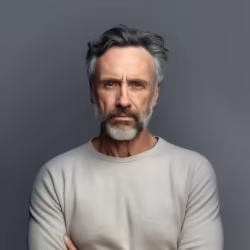
How to Photograph People Who Feel Awkward in Front of the Camera
A warm, practical guide for photographing awkward or camera-shy clients with trust, clear direction, movement, consent-aware posing, and small wins.
Photography Tips
4 min read

Published June 18, 2026 | 7 min read
To pose people naturally in photos, start with comfort before shape: explain what will happen, give simple movement prompts, demonstrate poses on yourself, and adjust the scene instead of trying to force one perfect posture. Natural posing works best when the person has something easy to do, knows they can pause or say no, and feels guided rather than judged.
 Natural posing starts with clear direction, respectful distance, and small prompts the subject can actually follow.
Most awkward photos begin before the pose. If the subject is unsure what to do, they may freeze, over-smile, hold their breath, or copy a pose that does not feel like them. Give people a calm starting point before you ask for expression, movement, or connection.
 A short conversation before shooting can make the first pose feel less like a test.
Movement gives people something to think about besides the camera. The prompt does not need to be dramatic; small actions often look more natural than a big performance. Keep prompts flexible so they work across ages, abilities, body types, and personalities.
 Walking, turning, pausing, and reacting can create candid-looking frames without leaving the pose to chance.
Hands, shoulders, and facial expression are where tension often shows first. Instead of telling someone not to look awkward, give them a practical job: place a hand somewhere comfortable, relax their shoulders on an exhale, or look away for a moment before returning to the camera.
Area | What to avoid | Natural cue |
|---|---|---|
Hands | Hands floating with no purpose | Lightly hold a sleeve, jacket edge, cup, chair, pocket, or another hand when appropriate. |
Shoulders | Raised shoulders and held breath | Take a slow breath out, then let the shoulders drop before the frame. |
Face | Holding one forced expression too long | Look away, reset the mouth, then return to the camera with a smaller expression. |
Standing | Locked knees and stiff feet | Shift weight gently or take one small step so the body is not frozen. |
Seated | Sinking into the chair with no energy | Sit near the front edge or turn the chair slightly if that feels comfortable. |
Direction | Too many corrections at once | Change one thing at a time: eyes, hands, shoulders, or feet. |
 Small cues for hands and posture usually work better than over-directing the whole body.
One posing structure does not fit every subject. A solo portrait may need calm direction and variety. A couple may need interaction. A group may need simple spacing and a shared activity. Keep the prompt matched to the relationship, the culture of the event, and each person's comfort level.
Subject | Try this | Watch for |
|---|---|---|
Solo client | Give one action at a time: walk, turn, sit, lean, look away, or use hands naturally. | Repeating the same angle or asking for an expression they cannot hold comfortably. |
Couple | Ask them to walk together, talk quietly, adjust distance, or look at each other before looking back. | Assuming every couple wants the same level of closeness or romantic direction. |
Small group | Create a loose shape, then give the group a shared action such as walking, reacting, or looking at one person. | Everyone standing in a flat line unless the moment truly calls for it. |
Family or mixed ages | Use simple prompts and short bursts so people can reset often. | Expecting every person to hold one exact pose for a long time. |
Model or portfolio subject | Build a sequence of small changes: hands, shoulder angle, gaze, movement, then expression. | Making the set feel like disconnected poses instead of a usable range. |
 Couples and groups usually look more natural when the prompt gives them a way to interact.
Mistake | Why it hurts the photo | Fix |
|---|---|---|
Starting with a complicated pose | The subject has to remember too much before they feel safe. | Begin with standing, breathing, looking, or walking, then refine one detail. |
Giving body-critical feedback | It makes people self-conscious and can break trust. | Describe the image goal instead: more space, softer shoulders, cleaner angle, or stronger connection. |
Physically adjusting someone without consent | It can feel intrusive and is not necessary for most posing direction. | Use verbal cues, demonstrate on yourself, or ask explicit permission before any adjustment. |
Using the same pose for everyone | People move, express, and feel comfortable in different ways. | Offer options and let the subject choose what feels natural. |
Over-shooting one expression | A held smile or serious look can become tense. | Reset often with movement, conversation, and looking away. |
Ignoring light and background | Even a good prompt can look messy if the scene distracts. | Move the person, clean the background, or use better light before refining the pose. |
Natural posing is only one part of a stronger final set. For related shooting advice, read portrait photography tips for better client photos, best lighting tips for outdoor photography, and the best way to share model portfolio photos. When the images are edited, Gampi can help you present the final gallery cleanly without making the posing article about delivery.
After the shoot, use Gampi to organize and share finished portraits, portfolio selects, or client-ready galleries.
Give people simple actions instead of rigid positions. Start with comfort, demonstrate the idea yourself, use movement prompts, guide one detail at a time, and let the subject choose options that feel natural for them.
Useful candid posing prompts include walking slowly, looking away then back, talking to someone nearby, adjusting a jacket or sleeve, shifting weight, laughing at a real comment, or taking a breath before looking at the camera.
Photographers make clients comfortable by explaining the process, using warmup frames, giving clear direction, avoiding body-critical language, offering choices, and asking consent before moving close or adjusting anything.
Hands usually look more natural when they have a light job: resting in pockets, holding clothing, touching a chair, holding another person's hand when appropriate, or relaxing on a lap. Avoid forcing hands into one universal pose.
Pose couples naturally by giving them ways to interact: walk together, talk quietly, look at each other, adjust distance, hold hands if they want to, or react to a small prompt. Do not assume every couple wants the same closeness or romantic style.
A warm, practical guide for photographing awkward or camera-shy clients with trust, clear direction, movement, consent-aware posing, and small wins.
A practical guide to natural pet photos: calm setup, window light, pet-level angles, dog and cat movement, autofocus, owner help, and humane pacing.
A warm, practical guide to studio posing for clients, creators, models, and beginner photographers who want portraits to feel natural and intentional.