
Photo Delivery Platform for Wedding Photographers: A Practical 2026 Workflow
A practical wedding photo delivery workflow covering previews, galleries, final transfers, access settings, and client expectations.
Photographer Tools
4 min read

Published June 18, 2026 | 6 min read
A beginner wedding photography shot list should cover preparation, getting-ready details, ceremony, couple portraits, family and wedding-party groups, reception details, candids, and any personal or cultural moments the couple requests. Use it to protect priorities and timing, not to script every frame.
 A beginner shot list works best when it helps you prepare without pulling attention away from the real wedding day.
Stage | Photos to plan | Beginner note |
|---|---|---|
Pre-wedding planning | Couple priorities, family groupings, venue rules, timeline, contacts | Confirm what matters most before the day starts |
Getting ready | Wardrobe, rings, bouquet, shoes, invitations, hair, makeup, candid prep | Ask what details are meaningful instead of assuming every item matters |
Ceremony | Processional, vows, rings, wide scene, reactions, recessional | Follow officiant and venue rules before moving or using flash |
Portraits | Couple portraits, immediate family, wedding party, VIP combinations | Use a short approved group list so portraits stay calm |
Reception | Room setup, tables, speeches, dances, cake, food, candids | Adapt to the timeline, lighting, and events the couple actually planned |
Exit and extras | Send-off, night portraits, cultural moments, backup detail shots | Leave room for moments that do not fit a standard checklist |
Before building the final list, ask the couple, planner, and venue what is expected. A beginner photographer should know the ceremony restrictions, family dynamics, key people, timing pressure, backup locations, and any traditions that need space and respect.
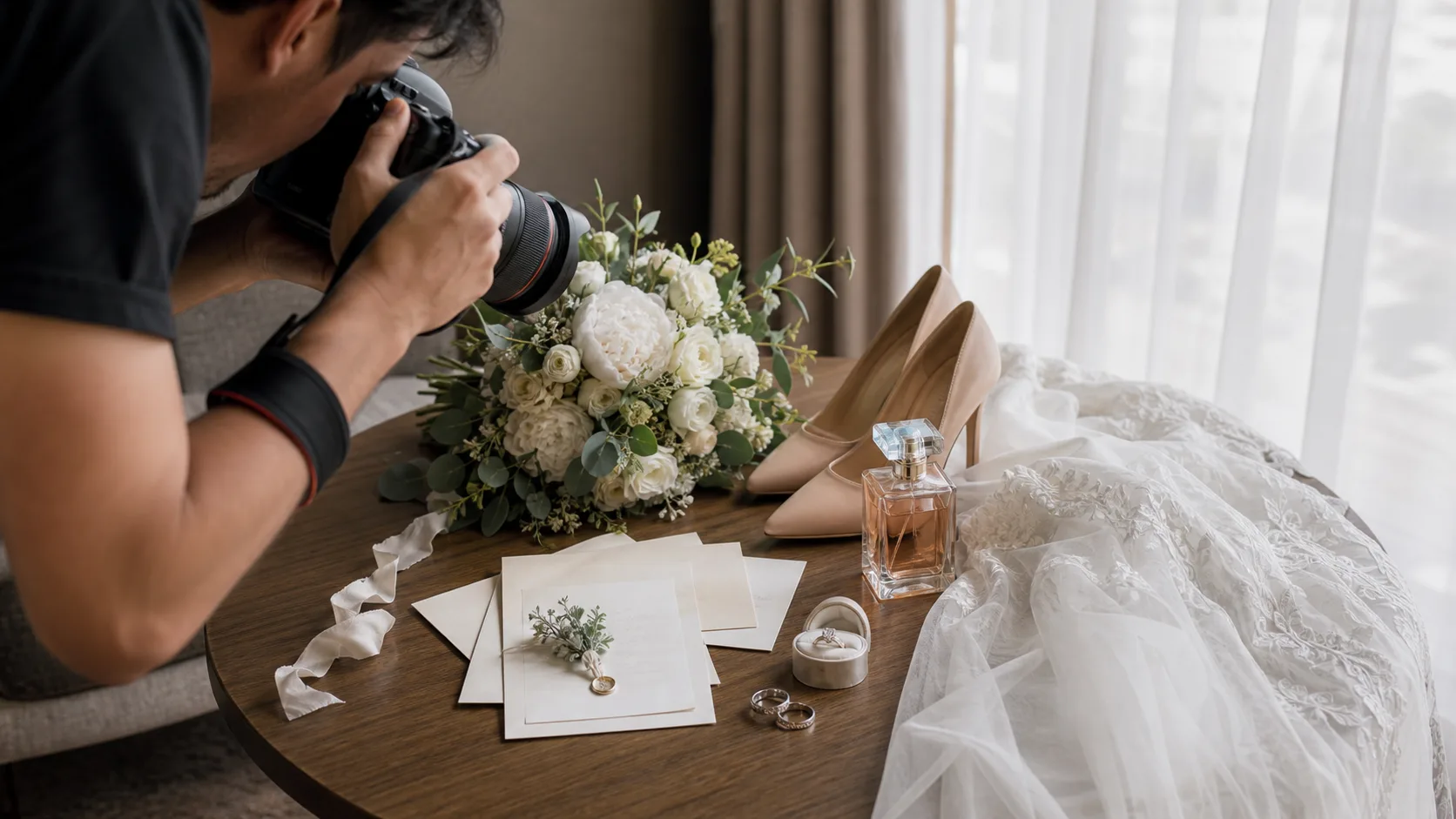 Getting-ready detail photos should reflect what the couple values, not just what appears on a generic checklist.
Ceremony coverage should be respectful first and comprehensive second. Some venues limit movement or flash, and some traditions include moments that should not be interrupted. Learn the rules early, choose quiet positions, and prioritize the couple, guests, and officiant over your own checklist.
 The best ceremony images often come from prepared, quiet positioning rather than constant movement.
 A short approved family list keeps formal portraits efficient and reduces stress for everyone.
 Reception coverage should balance details, scheduled events, and unscripted moments between guests.
A must-have wedding photography shot list is only useful when it fits the actual wedding. Use the checklist as a starting point, then remove what does not apply and add what the couple, families, traditions, and location require.
After the wedding, keep the next step simple. For related workflows, read how to deliver wedding photos to clients, the best way to send full wedding galleries, and how to share high-resolution photos with clients. You can also review Gampi Wedding Photography for organizing the final gallery after the shoot.
After the shoot, use Gampi to present the edited story, organize albums, and keep the final handoff easy for the couple.
A beginner should plan for getting-ready details, ceremony coverage, couple portraits, family and wedding-party portraits, reception details, candids, and any personal or cultural moments the couple requests.
A must-have list is a flexible set of priority photos for the specific wedding: preparation, ceremony, portraits, reception, details, and requested moments. It should be approved by the couple and adjusted to the venue and schedule.
Meet the couple, confirm the timeline, ask about family groupings and traditions, learn the venue rules, prepare backup gear and cards, scout portrait light, and keep the shot list short enough to use under pressure.
There is no universal number. Take enough to cover each key moment safely without overshooting so heavily that editing becomes unmanageable. The final delivered count depends on coverage hours, event size, package, and style.
Yes. Couples should approve the priority list, family portrait combinations, and any special traditions or details before the wedding so expectations are clear and sensitive situations are handled with care.
A practical wedding photo delivery workflow covering previews, galleries, final transfers, access settings, and client expectations.
A practical QR code wedding photo sharing workflow for signs, cards, wedding websites, guest access, privacy, and final gallery delivery.
A practical wedding photo delivery workflow for preparing files, organizing albums, sending client links, and following up after the final handoff.