
Best Symmetry and Balance Tips for Photographers
A practical guide to symmetry, asymmetry, visual weight, reflections, portraits, landscapes, product images, street scenes, and balanced final selects.
Photography Tips
8 min read

Published June 22, 2026 | 9 min read
To photograph reflections creatively, start by choosing a reflective surface, then decide whether the reflection should be clean, distorted, layered, or abstract. Move the camera before changing gear: lower your angle, tilt slightly, simplify the background, control bright highlights, and make sure the reflection supports the subject instead of becoming a random trick.
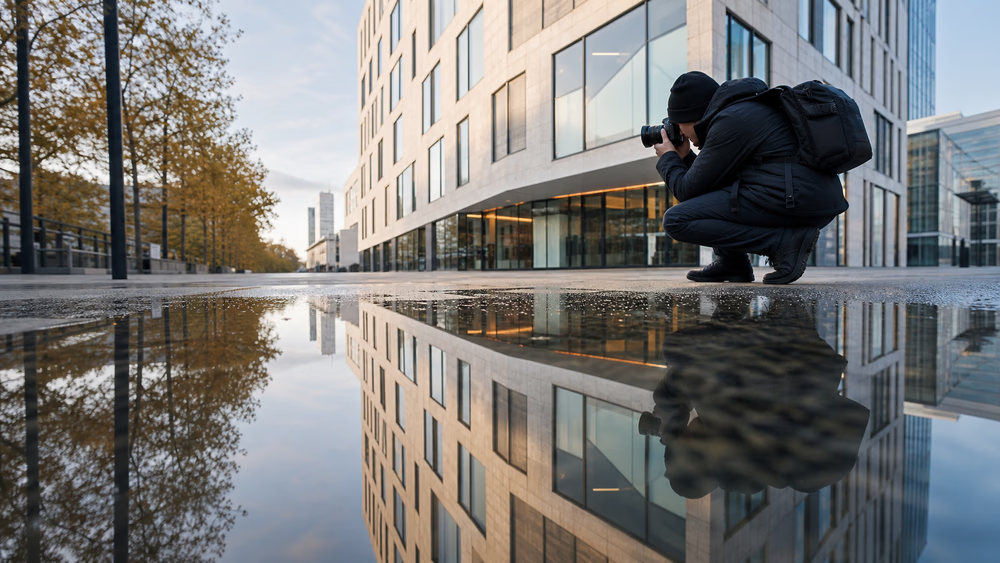 Creative reflection photography often starts with a low angle, a clean surface, and a deliberate relationship between the real scene and the reflected one.
Good reflection photos do not require a perfect lake or a studio mirror. Small, ordinary surfaces can work because reflection photography is mostly about angle. A shallow puddle can become a wide city mirror. A window can combine inside and outside layers. Polished metal can turn buildings into color and shape. Even a phone screen, car panel, table, or wet pavement can add a second version of the scene.
Surface | Creative use | Watch for |
|---|---|---|
Water | Mirror-like symmetry, ripples, color streaks, sky, architecture, and silhouettes | Slippery edges, blown highlights, and reflections that disappear when wind moves the surface |
Puddles | Low-angle city scenes, umbrellas, signs, buildings, and travel details | Traffic, unsafe curb positions, dirty edges, and clutter doubled in the frame |
Glass and windows | Layered street scenes, indoor-outdoor overlap, soft silhouettes, and abstract shapes | Privacy, unreadable clutter, glare, and photographing into private spaces |
Mirrors | Portrait fragments, frames within frames, repeated gestures, and controlled studio ideas | Unwanted camera reflections, awkward body fragments, and consent-sensitive settings |
Metal and shiny surfaces | Warped architecture, color blocks, abstract compositions, and graphic lines | Harsh specular highlights and shapes that become too confusing |
Screens | Subtle reflections, product details, or conceptual portraits | Fingerprints, moire, private notifications, and fake-looking glare |
For puddle reflection photos, stay on a sidewalk or other safe surface, keep the camera low, and let the puddle fill a meaningful part of the frame. A small puddle can look larger when the lens is close to its edge. Use umbrellas, buildings, streetlights, tree shapes, or sky as reflected subjects, then wait for a clean gesture or passing shape instead of photographing every wet spot you see.
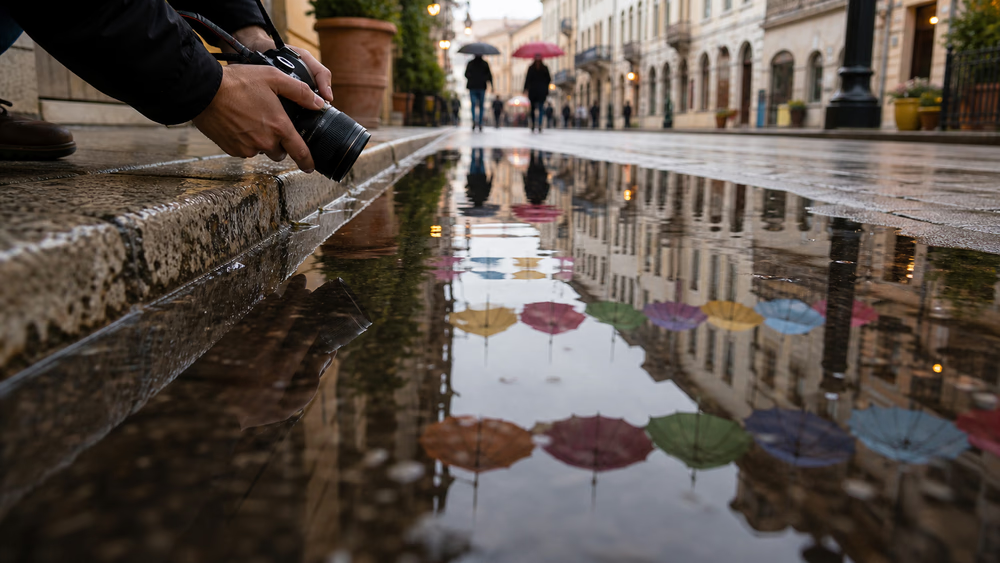 A puddle does not need to be large. The lower the camera, the more the surface can fill the composition.
Glass reflection photography works best when you treat the window as a layered surface rather than a transparent wall. Reflections on glass can combine a street, sky, subject, and interior shapes in one frame. Work in public places, avoid private interiors, and wait until the reflected shapes simplify. If the frame feels busy, move a few inches; tiny shifts can separate a face, tree, sign, or bright patch from the subject.
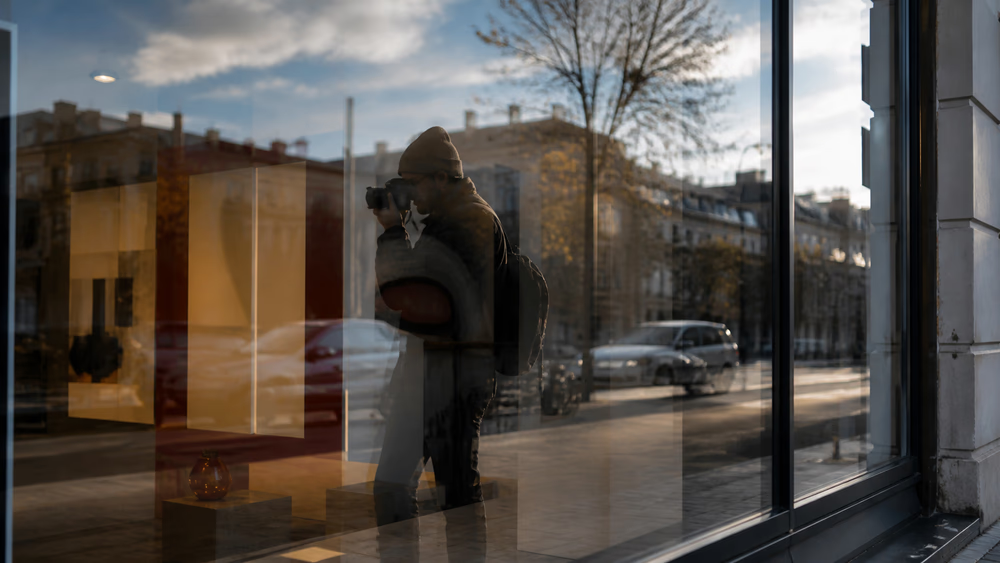 Windows can layer the reflected street over shapes behind the glass, but privacy and readable distractions need careful attention.
Idea | How to use it | Why it works |
|---|---|---|
Symmetry | Place the horizon, building edge, or face near the middle when the real and reflected halves are clean. | It gives the photo order and calm, especially with architecture, water, and portraits. |
Broken symmetry | Let a ripple, gesture, subject, or crop interrupt a nearly balanced reflection. | The image feels intentional without becoming stiff. |
Layering | Use glass, wet streets, or shiny metal to place two scenes in the same frame. | The viewer gets a richer story than a single flat subject. |
Abstraction | Move closer until shapes, colors, and lines matter more than the literal subject. | Distortion can make ordinary surfaces feel graphic and fresh. |
Framing | Use a mirror edge, window frame, puddle edge, or metal curve to contain the reflected subject. | The frame tells the viewer where to look first. |
Distortion | Use ripples, curved metal, old glass, or uneven surfaces to bend familiar shapes. | The reflection becomes a creative interpretation, not just a duplicate. |
 Reflections do not have to be perfect mirrors. Distortion can turn architecture, sky, and light into a stronger abstract composition.
Angle changes reflections more than most camera settings. A lower angle usually makes a puddle or wet surface feel larger. A slight sideways step can separate overlapping shapes in glass. For focus, decide whether the real subject, the reflected subject, or the reflective surface is the main point. With water and glass, focus may need a manual adjustment if autofocus grabs the wrong layer.
Control | Try this | Be careful with |
|---|---|---|
Angle | Move low for puddles, parallel for symmetry, and sideways for layered glass. | Assuming the first reflection angle is the best one |
Focus | Focus on the reflected subject when the reflection carries the image, or stop down when both layers matter. | Autofocus locking onto dust, glass, water texture, or the wrong plane |
Exposure | Protect bright reflected highlights and lift shadows later if needed. | Overexposed sky, white windows, and shiny metal hotspots |
Aperture | Use wider apertures for dreamy layers and smaller apertures when the reflection and real scene both need detail. | Making a busy reflection too sharp everywhere |
Polarizer | Rotate it while watching the viewfinder because it can reduce reflections, deepen color, or remove the reflection you wanted. | Thinking a polarizing filter always enhances reflections |
Mirrors are useful for portraits when they reveal something specific: an eye, gesture, hand, profile, outfit detail, or relationship between the subject and the space. Keep the mirror idea simple at first. Use one mirror edge as a frame, watch what appears behind the photographer, and make sure the subject understands how the reflection will be used. In bathrooms, dressing rooms, bedrooms, and private spaces, consent and context matter more than the cleverness of the frame.
 A mirror can isolate a face, gesture, or detail, but the strongest results usually come from a simple setup and clear consent.
Photography type | Reflection idea | Practical note |
|---|---|---|
Portraits | Use mirrors, windows, wet pavement, or polished tables to show a second angle of the subject. | Keep the reflection flattering and get consent when the setup reveals private details. |
Street photography | Work with puddles, bus windows, storefront glass, building facades, and shiny cars. | Stay out of roads and respect privacy when shooting through or into windows. |
Travel | Use fountains, hotel windows, train stations, beaches, and rainy streets to show place in a less obvious way. | Include enough real-world context so the image is not only an abstract texture. |
Events | Look for polished floors, glass doors, tables, mirrors, and wet outdoor areas after rain. | Do not block guests, create trip hazards, or chase a reflection at the expense of the main moment. |
Architecture | Use symmetry first, then break it with people, shadows, ripples, or partial framing. | Check vertical lines and avoid letting perfect symmetry become the only idea. |
Mistake | Why it weakens the photo | Fix |
|---|---|---|
Only chasing perfect symmetry | The image can feel stiff or familiar. | Make one clean symmetrical frame, then try a broken, layered, or abstract version. |
Letting clutter double | Reflections can repeat poles, signs, bright spots, and awkward crops. | Clean the frame edges and move until the reflected shapes support the subject. |
Focusing on the wrong layer | The reflection may look soft when it is the main subject. | Use single-point autofocus or manual focus and confirm the reflected subject is sharp enough. |
Overexposing reflected highlights | Water, glass, and metal can clip faster than the rest of the scene. | Lower exposure slightly and check the brightest reflected areas. |
Using a polarizer without checking | The filter may remove the reflection you wanted to photograph. | Rotate the polarizer slowly and choose the amount of reflection deliberately. |
Ignoring privacy or safety | A clever angle is not worth trespassing, unsafe traffic positions, or intrusive window photos. | Stay in public safe areas, avoid private interiors, and ask when consent is needed. |
After a reflection shoot, compare similar frames side by side. Keep the photos where the reflection adds structure, story, mystery, or emotion. For related technique guides, read composition tips for beginner photographers, framing tips for stronger photos, and how to capture emotion in photography. Once the final set is edited, Gampi can help you organize and present polished images, but the creative decision still starts with choosing the frames where the reflection earns its place.
Use Gampi after editing to organize finished reflection photos into clean galleries and share final files with less friction.
Choose a reflective surface, move until the reflection has a clear relationship to the subject, and decide whether the image needs symmetry, layering, distortion, framing, or abstraction. Start with a clean version, then try a lower angle, a closer crop, or a more broken reflection.
Water, puddles, glass, windows, mirrors, polished metal, shiny floors, screens, tables, cars, and wet pavement can all create good reflection photos. The best surface is the one that adds shape, story, light, or mood without creating unsafe or intrusive shooting conditions.
Stay in a safe pedestrian area, hold the camera low near the puddle edge, and use buildings, umbrellas, streetlights, sky, or people as reflected shapes. Focus on the reflected subject if it is the main point, expose for bright water highlights, and avoid stepping into traffic for a lower angle.
A polarizer can help, but it can also reduce or remove reflections. Rotate it while watching the scene and choose the amount of reflection deliberately. If the reflection is the subject, do not assume the strongest polarization is the best setting.
Reflections can add symmetry, depth, repeated shapes, leading lines, frames within frames, color, mood, and visual tension. They improve composition when they guide attention or add meaning, not when they simply duplicate clutter.
A practical guide to symmetry, asymmetry, visual weight, reflections, portraits, landscapes, product images, street scenes, and balanced final selects.
A practical guide to photographing through windows, museum glass, cars, planes, aquariums, and storefronts with fewer reflections, less glare, and cleaner focus.
A warm, practical guide to natural children photography with safe pacing, guardian permission, playful prompts, flexible camera settings, and relaxed family interactions.