
Best Tips for Taking Photos at Events
A practical event photography guide for preparation, settings, candid moments, group photos, low light, and organized final selections.
Photography Tips
5 min read

Published June 18, 2026 | 7 min read
A strong photo session plan does not need to be complicated. Before the shoot, confirm the client goal, intended use, location, timing, light, weather backup, loose shot list, gear, storage, and communication details. The point is not to script every frame; it is to remove avoidable uncertainty so you can stay present when the session starts.
 Good planning gives a photo session structure without making the final images feel rigid or over-produced.
Planning begins with purpose. A portrait session for a website, a family session for prints, a portfolio shoot for a model, and event coverage for a brand all need different priorities. Ask what success looks like before you decide on location, posing, styling, lens choice, or final image count.
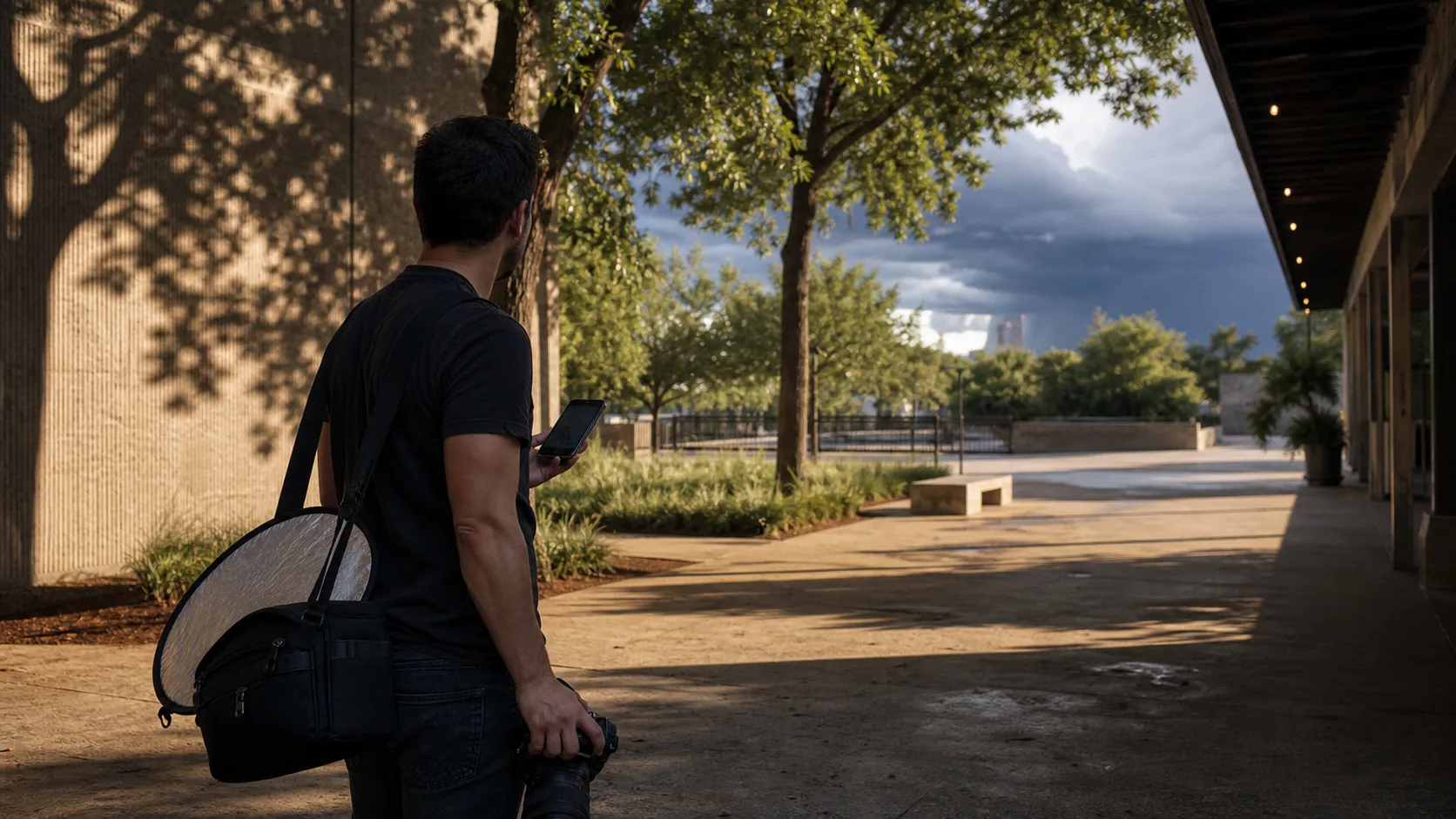 Client-prep questions help you plan images that fit the real purpose of the session.
A location is more than a pretty background. Check access, parking, walking distance, crowd level, shade, indoor alternatives, and the direction of light at the session time. If permits, venue rules, or private-property access might apply, treat that as a general planning item and confirm requirements with the relevant location or organizer. This is practical prep, not legal advice.
Planning item | What to check | Why it matters |
|---|---|---|
Location access | Meeting point, parking, walking distance, elevators, stairs, and opening hours | Prevents late starts and keeps clients calmer when they arrive |
Light direction | Sun position, open shade, window light, backlight, and mixed indoor light | Helps you choose the best session time and first setup |
Weather backup | Covered areas, indoor alternative, reschedule policy, and wind or rain concerns | Keeps the session usable when conditions change |
Background options | Clean walls, textured areas, depth, clutter, signs, and distractions | Gives variety without moving too far or wasting client energy |
Rules and permissions | Venue guidelines, organizer expectations, tripod limits, or general access rules | Avoids preventable interruptions during the shoot |
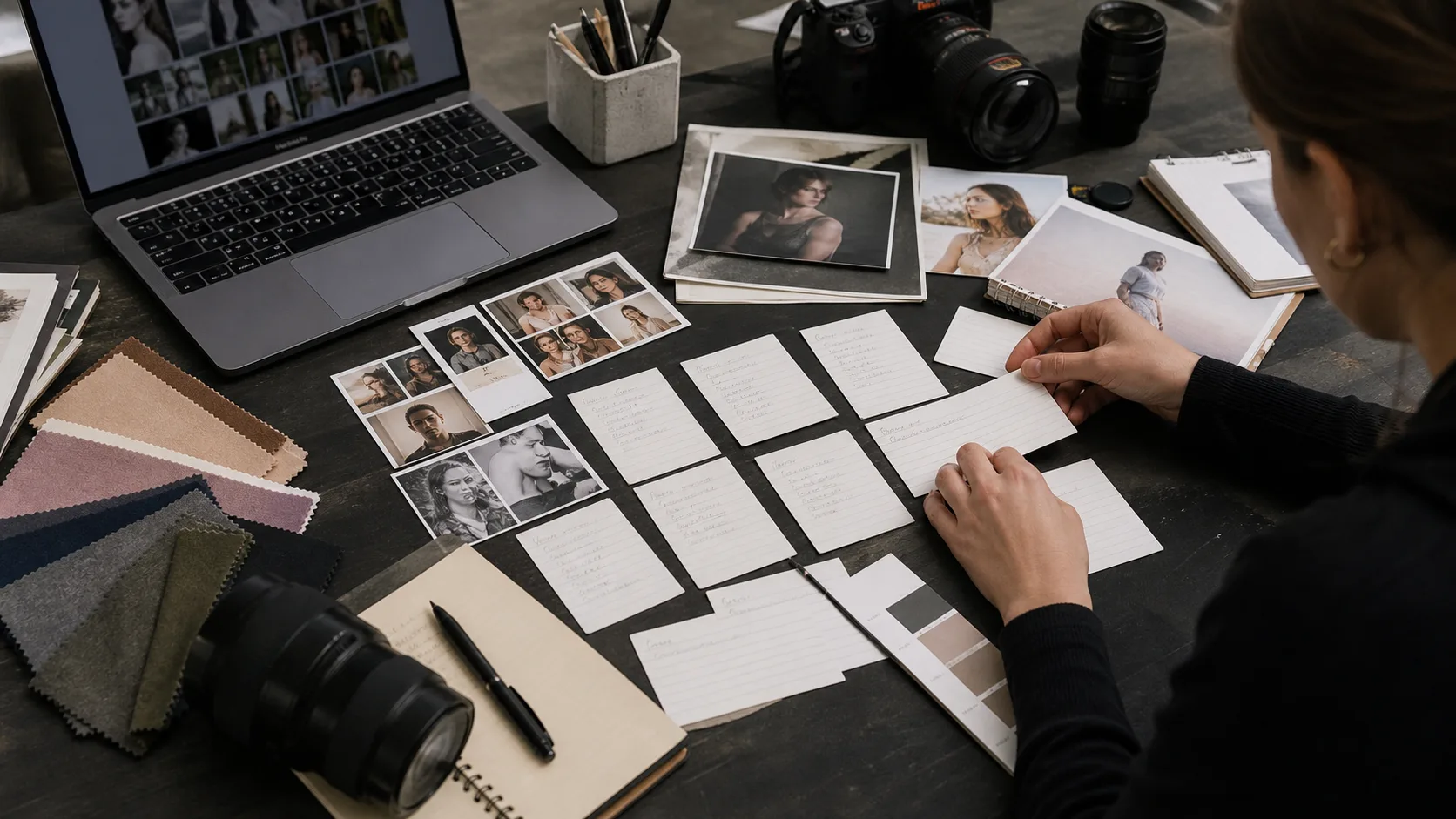 A quick location check can solve light, access, and backup problems before the client is standing there.
A useful shot list protects the important images without turning the session into a rigid checklist. Think in groups rather than exact poses: opening frames, must-have portraits, details, interaction, movement, wide context, close expressions, and backup ideas. Leave room for the best frame to be something you did not predict.
 A flexible shot list gives direction while still leaving space for natural posing and real moments.
Gear planning should match the session, not someone else’s ideal kit. A simple portrait session may need less equipment than a full event, and a portfolio shoot may need styling tools or tethering only when they serve the goal. Keep the list flexible, brand-independent, and focused on preventing obvious failures.
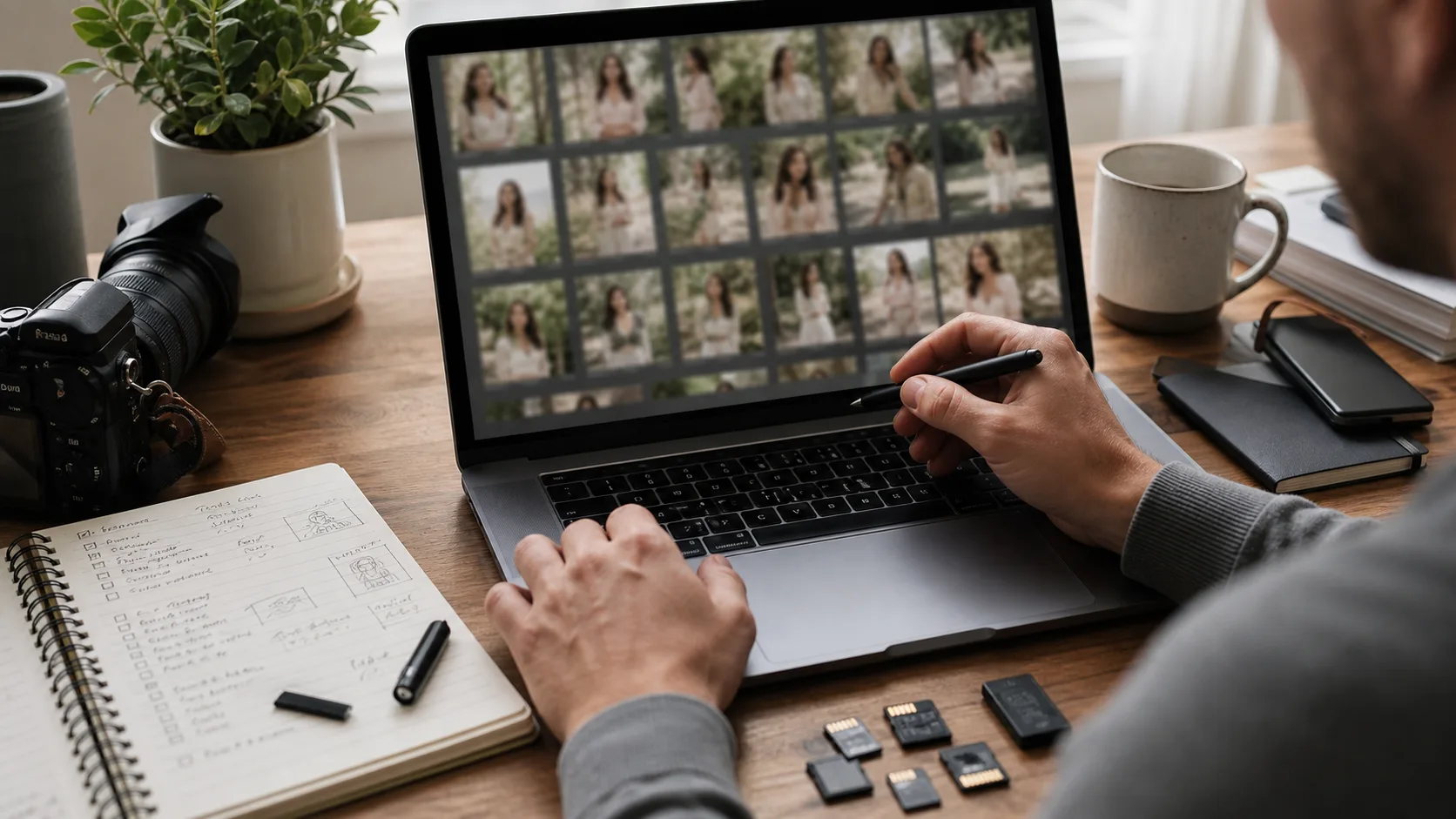 The best gear checklist is the one that matches the session and prevents avoidable interruptions.
Clients feel more relaxed when they know what will happen. Send prep notes that are specific enough to reduce confusion, but simple enough that a beginner client will actually read them. The exact message depends on the session, but the categories stay consistent.
When | Planning task | What to decide |
|---|---|---|
One to two weeks before | Confirm goals and usage | Purpose, key images, wardrobe direction, location needs, and approval notes |
A few days before | Check location and light | Meeting point, timing, background options, weather backup, and any general rules |
The day before | Prepare gear and client notes | Batteries, cards, lenses, backup kit, arrival details, and final reminders |
Session day | Start simple and adjust | First safe setup, client comfort, light changes, and must-have frames |
After the shoot | Back up and select | Original file backup, first cull, selects, edits, and organized presentation |
After the session, shift from planning to selection. Back up the files, remove obvious misses, compare similar frames, and organize the strongest images into a clean final set. For related next steps, read portrait photography tips for better client photos, how to pose people naturally in photos, and how to choose the best photos from a photoshoot.
Use Gampi after the shoot to keep finished client photo sets tidy, easy to browse, and ready to share when your edit is complete.
Photographers plan a session by confirming the client goal, intended image use, location, timing, light, backup options, must-have images, gear, storage, and communication details before the shoot.
A practical checklist should include client goals, wardrobe notes, location details, meeting time, shot priorities, weather backup, camera gear, batteries, memory cards, backup storage, and after-shoot file protection.
Send a clear note with date, time, meeting point, wardrobe guidance, what to bring, what the session will feel like, backup plans, and a simple invitation to ask questions before the shoot.
Check charged batteries, clean cards, lenses, backup gear, location details, client contact information, weather, travel time, permits or venue expectations when relevant, and a plan for backing up files afterward.
A simple portrait session may only need goal confirmation, wardrobe notes, one good location, light planning, a short shot list, and prepared gear. More complex sessions need more detail, but beginners should keep the plan practical and flexible.
A practical event photography guide for preparation, settings, candid moments, group photos, low light, and organized final selections.
Learn how to take better candid photos with practical observation habits, timing cues, flexible camera settings, respectful distance, and a simple checklist for real moments.
Use these practical portrait photography tips to help clients feel comfortable, find better light, pose naturally, and create cleaner final images.