
How to Take Better Candid Photos
Learn how to take better candid photos with practical observation habits, timing cues, flexible camera settings, respectful distance, and a simple checklist for real moments.
Photography Tips
6 min read

Published June 23, 2026 | 6 min read
The best timing tips for photographers are simple but demanding: anticipate before the moment, watch body language and light, keep camera settings ready for the speed of the scene, use burst mode in short intentional sequences, and wait when nothing meaningful is happening. Good timing is not luck alone. It is the habit of reading what is about to change.
 Strong timing starts before the shutter press: watch the scene long enough to know where emotion, gesture, and light may meet.
Better photo timing begins a few seconds early. Instead of reacting only after something obvious happens, study the rhythm of the scene. Notice who is about to greet someone, which child is about to run back into good light, when a speaker is building toward a laugh, or how a subject relaxes right after a posed direction.
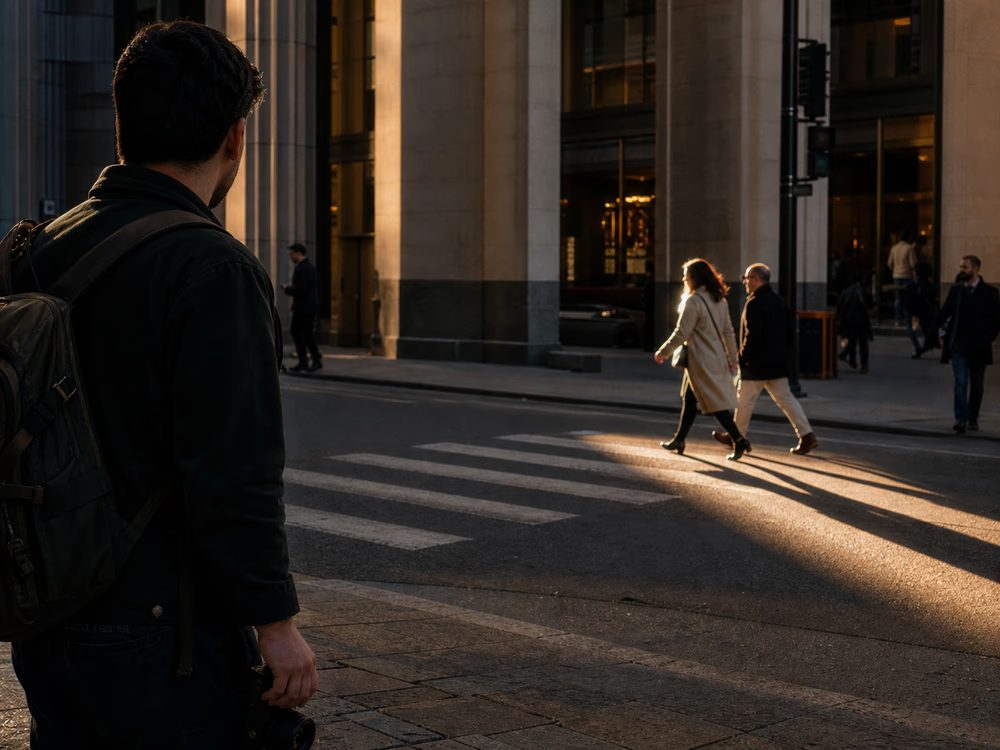 Timing improves when you find the frame first, then wait for gesture, light, and spacing to line up.
Timing is not only the peak smile or the fastest action. In many photographs, the strongest moment is when several small cues agree. A hand lifts, eye contact changes, a subject leans toward someone, a patch of sunlight opens, or a moving person separates cleanly from the background.
Timing cue | What to watch | Better response |
|---|---|---|
Gesture | Hands, shoulders, posture, steps, and the beginning or end of a movement | Press when the gesture is readable and separated from clutter. |
Expression | Eyes before smiles, reactions after jokes, small changes after a prompt | Wait for the expression to settle instead of shooting the instant someone starts to smile. |
Motion | Direction, speed, repeated patterns, and the point where movement slows | Start tracking early and time the frame at a readable shape, not only at maximum speed. |
Light | Cloud breaks, window light, open shade, stage light, sunset edges | Hold the frame until the subject enters the cleanest light. |
Interaction | Greetings, reactions, shared looks, distance between people | Photograph the relationship, not only the person speaking or moving. |
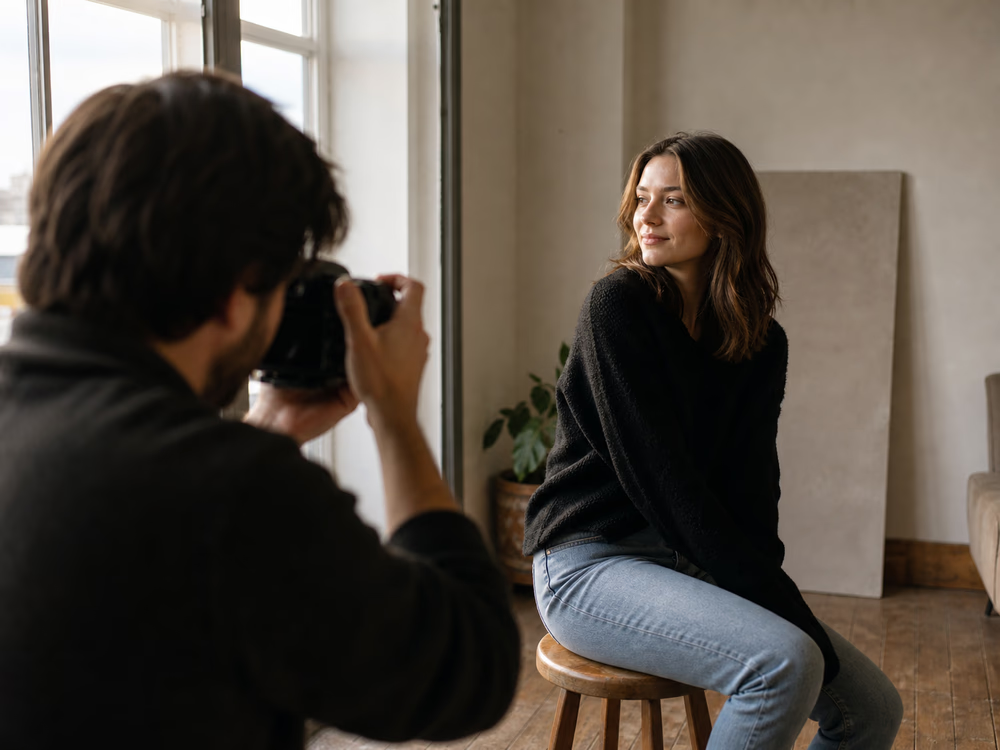 For portraits, timing often means noticing the second when a subject stops performing and starts feeling natural.
Burst mode can help when motion or expression changes too quickly for one frame, but it should support observation, not replace it. Use short bursts when a child runs toward you, a couple starts laughing, a dancer spins, or a street subject passes through a narrow gap. Then stop, reset, and keep watching.
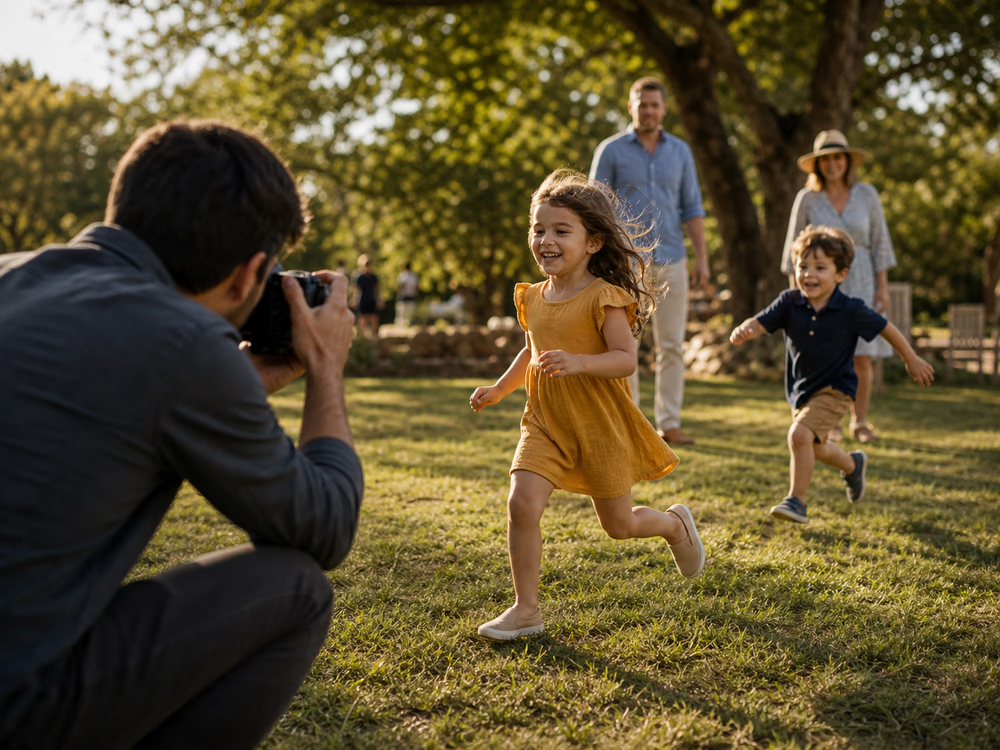 Short bursts are useful for unpredictable movement, but the best frame still depends on anticipation and selection.
Genre | Moment to anticipate | Timing habit |
|---|---|---|
Portraits | The relaxed breath after direction, the glance away and back, the first natural laugh | Give a simple prompt, stay quiet for a beat, and photograph the return to comfort. |
Weddings | First looks, parents reacting, hand squeezes, speeches, exits, dance-floor turns | Watch the people around the main event because reactions often carry the story. |
Events | Arrivals, greetings, demonstrations, applause, questions, side conversations | Learn the schedule, then arrive early to each transition before the crowd moves. |
Street photography | A pedestrian entering light, a gesture matching a background, layers briefly separating | Hold a clean composition and wait for the public scene to complete itself respectfully. |
Travel | Weather shifts, market rhythm, transportation moments, people moving through scale | Return to promising spots when light or activity has a stronger rhythm. |
Children and families | Running, hiding, leaning into a parent, quiet recovery after excitement | Keep shutter speed ready for quick motion and wait for expressions between the big actions. |
Mistake | Why it weakens the photo | Fix |
|---|---|---|
Shooting too soon | The frame catches the setup instead of the actual expression, gesture, or interaction. | Wait one more beat when the scene is still building. |
Shooting too late | The peak has passed, leaving awkward hands, closed eyes, or people moving out of the frame. | Start watching earlier and press just before the expected peak. |
Depending on burst mode for every scene | Too many similar frames make culling harder and can hide the fact that you were not anticipating. | Use short bursts only when the moment is genuinely changing quickly. |
Ignoring light changes | A good expression can fall into flat, harsh, or messy light. | Track where the light is improving and let subjects move into it when possible. |
Watching only faces | The frame misses the gesture, relationship, or context that explains the moment. | Scan hands, shoulders, spacing, eye lines, and background at the same time. |
Overcorrecting after one miss | Changing every setting or moving too much can make the next moment harder to read. | Adjust one variable, reset your position, and keep observing. |
Timing does not end when the shutter closes. During selection, compare neighboring frames carefully. The best timed image is usually the one where expression, gesture, focus, light, and story all become clear at once. A slightly quieter frame can beat a more dramatic one if it feels more truthful and readable.
For related practice, read how to take better candid photos, how to photograph movement without blur, how to capture emotion in photography, and how to choose the best photos from a photoshoot.
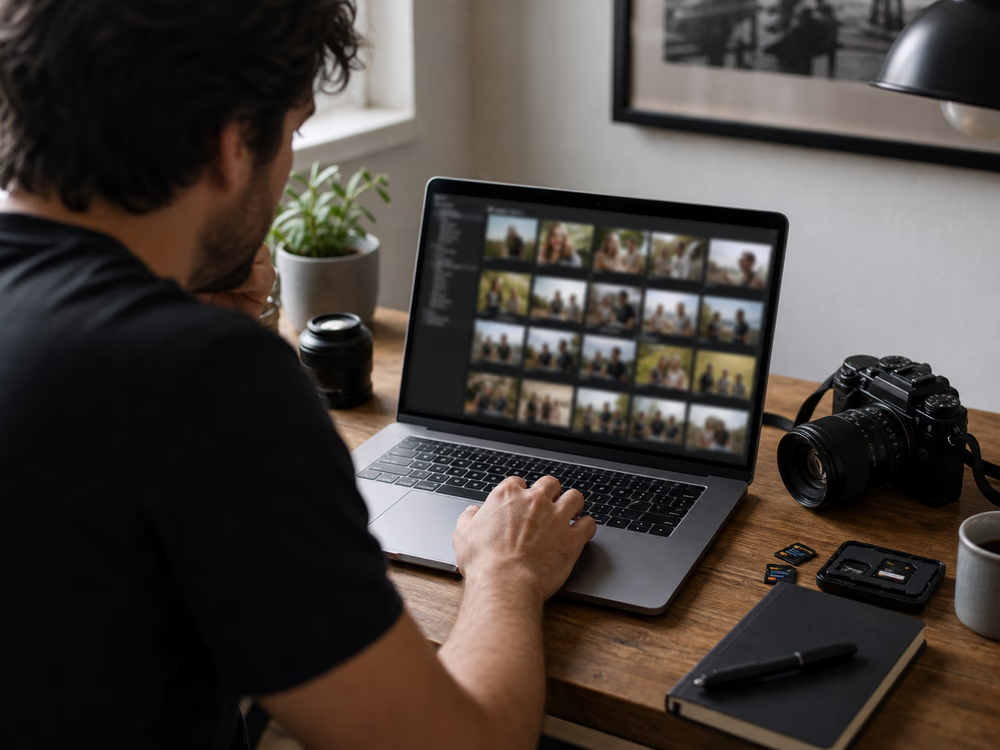 The final edit reveals whether the timing worked: compare neighboring frames for expression, gesture, light, and story.
When your final selects are ready, use Gampi to organize finished galleries and deliver polished photo stories without making clients search through duplicates.
Photographers improve timing by observing before shooting, anticipating transitions, tracking gesture and expression, practicing with repeated situations, and reviewing near-duplicate frames to learn which moment was strongest.
Timing in photography is the choice of when to press the shutter so gesture, expression, motion, light, focus, and story align clearly in one frame.
Choose a clean frame, watch what is about to change, keep settings ready for the subject speed, and press slightly before the expected peak instead of reacting after it is gone.
Yes, but intentionally. Short bursts help with fast or unpredictable movement, but they work best when the photographer is already anticipating the moment and tracking focus carefully.
Watch conversations, body language, repeated movement, light, and relationships. Reactions often start in posture, hands, and eye lines before they become obvious facial expressions.
Learn how to take better candid photos with practical observation habits, timing cues, flexible camera settings, respectful distance, and a simple checklist for real moments.
A warm, practical guide to natural children photography with safe pacing, guardian permission, playful prompts, flexible camera settings, and relaxed family interactions.
A practical beginner guide to sharper low-light photos: understand blur versus noise, choose settings, stabilize the camera, use available light, and edit dark files carefully.