
Best Timing Tips for Photographers
Learn practical timing tips for photographers: anticipation, observation, gesture, expression, motion, light, short bursts, patience, and choosing the strongest moment after the shoot.
Photography Tips
6 min read

Published June 19, 2026 | 5 min read
To photograph movement without blur, use a shutter speed fast enough for the subject, keep autofocus active on the part that must be sharp, shoot short bursts when timing is unpredictable, hold the camera steadily, and give the camera enough light through aperture, ISO, or added light when appropriate. Treat every setting as a starting point because a walking guest, a running child, and a dancer under dim lights all move differently.
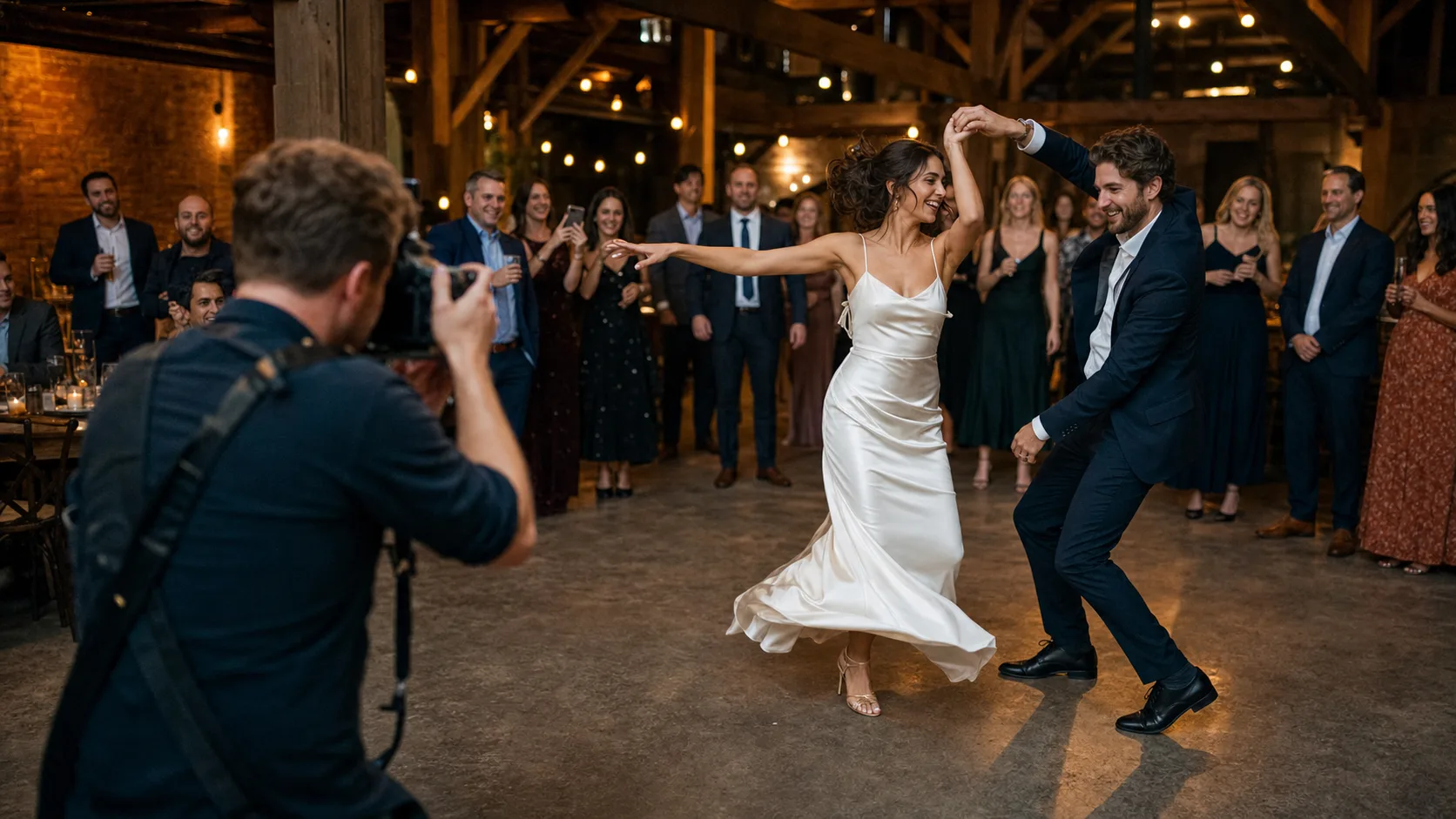 Sharp movement photos come from matching shutter speed, focus, light, and timing to the subject in front of you.
A blurry action photo is not always caused by the same mistake. Subject motion blur happens when the subject moves too far while the shutter is open. Camera shake happens when the camera moves during exposure. Missed focus happens when the focus plane lands in front of or behind the subject. Fixing the wrong problem can make the next frame worse, so diagnose before changing everything.
Problem you see | Likely cause | Better first fix |
|---|---|---|
Hands, feet, or faces streak while the background looks steady | Subject motion blur | Use a faster shutter speed or time the shot at a slower point in the movement. |
The whole frame looks smeared in one direction | Camera shake | Brace your body, use better handholding technique, or raise shutter speed. |
The background or clothing is sharp but the face is soft | Missed focus | Move the focus point, use continuous autofocus, and track the subject earlier. |
Only part of a group is sharp | Depth of field too thin | Stop down the aperture and compensate with ISO or light if needed. |
These shutter speeds are practical starting points, not universal rules. Faster motion, closer subjects, longer lenses, and large final prints usually need faster shutter speeds. Slower moments, wider lenses, or intentional blur can use slower speeds.
Subject or scene | Starting shutter speed | Adjust when |
|---|---|---|
Walking people or calm candids | 1/250s to 1/500s | Use the faster end for gestures, children, or longer lenses. |
Kids running, dance floors, pets, active families | 1/500s to 1/1000s | Raise shutter speed if hands, feet, or faces still blur. |
Sports, fast street action, performances | 1/1000s to 1/2000s | Use more ISO or a wider aperture when light is limited. |
Panning with a moving subject | 1/15s to 1/125s | Accept background blur and practice smooth tracking. |
Still details between action moments | 1/125s or slower when safe | Only slow down when neither subject nor camera movement matters. |
 Running children need faster starting speeds than posed portraits, especially when they move toward the camera.
Continuous autofocus, subject tracking, and burst mode help only when your technique supports them. Start tracking before the peak moment, keep the focus area on the face or key detail, follow through after pressing the shutter, and review a short sequence later for expression and sharpness. Burst mode improves your odds, but it does not replace timing or focus discipline.
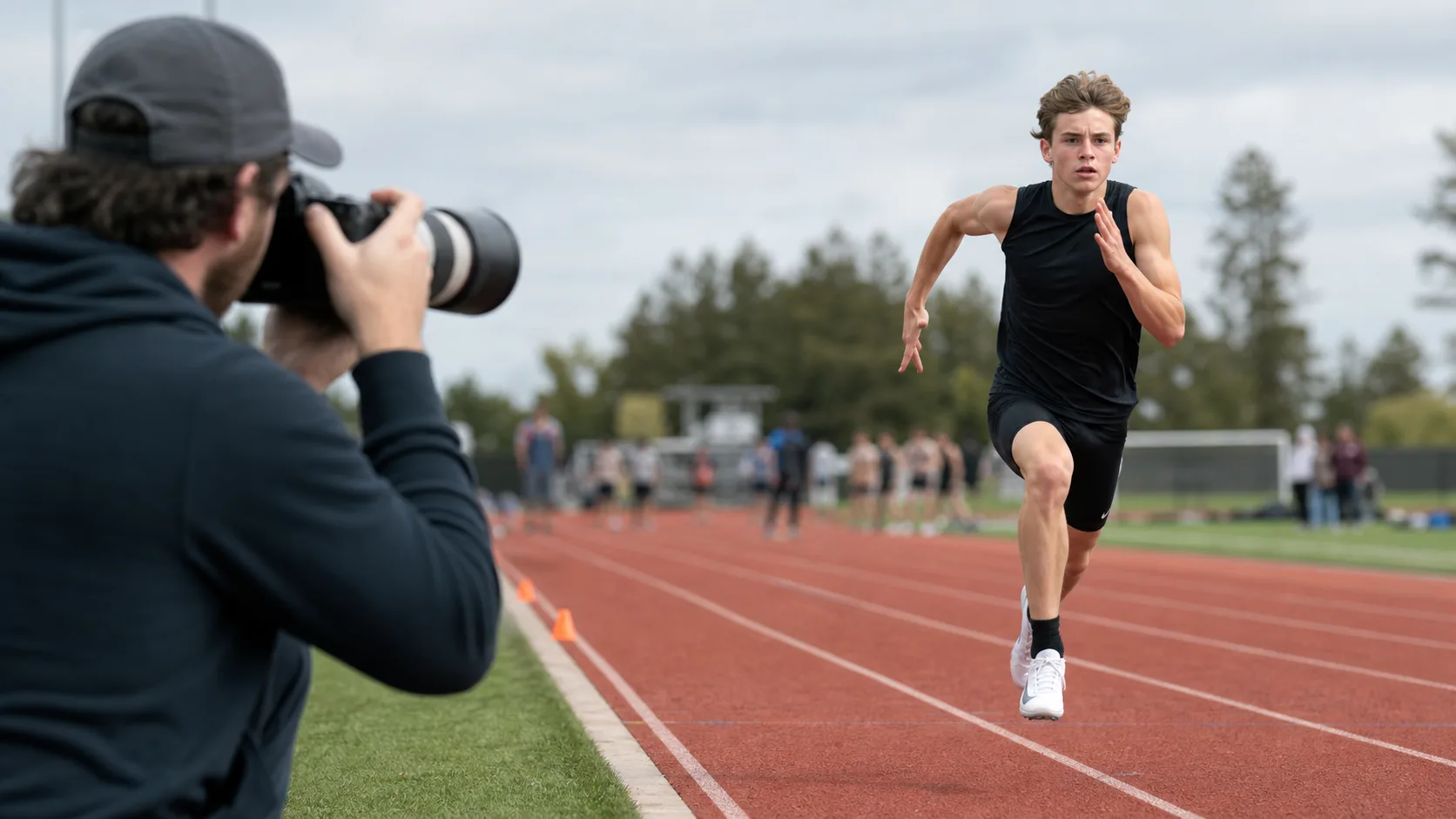 Fast action usually needs faster shutter speed plus enough light or ISO to keep the exposure usable.
Freezing motion often means less light reaches the sensor because the shutter is open for less time. If the photo becomes too dark, open the aperture when depth of field allows, raise ISO, move toward stronger available light, or add flash only when it is allowed and appropriate. Image stabilization can reduce camera shake, but it does not freeze a moving subject; shutter speed still has to match the subject movement.
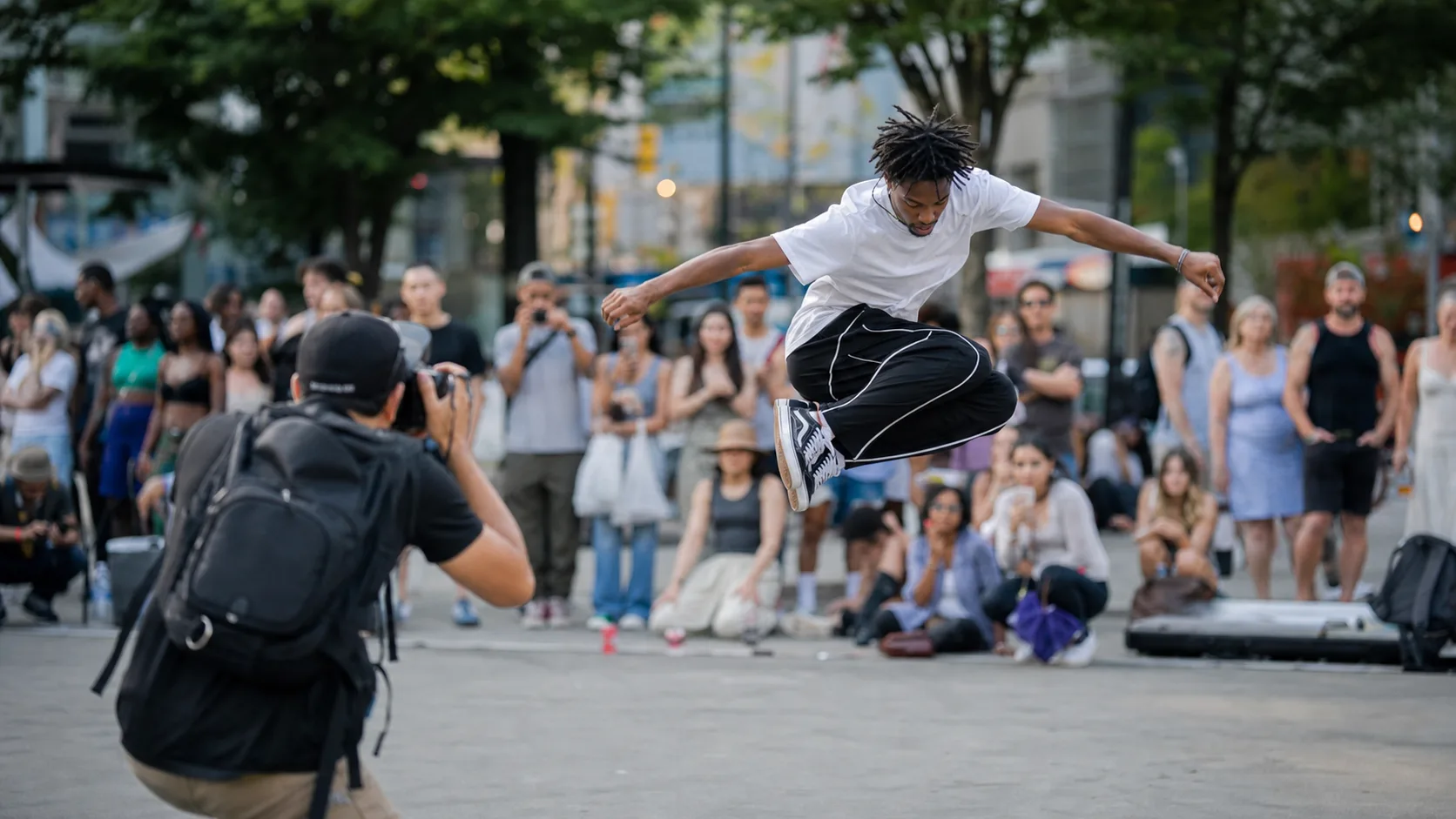 Tracking works best when you begin before the peak moment and keep following through after the shutter press.
The goal is not to remove all blur from photography. Panning, long exposures, dance-floor drag, and blurred crowds can show speed, energy, and atmosphere. The difference is intention: keep the important part readable, choose the amount of blur deliberately, and make sure the viewer understands what is meant to feel sharp.
After a moving-subject shoot, choose photos in passes. First remove frames with obvious shake, missed focus, or unusable expression. Then compare short sequences for the sharpest eyes, cleanest gesture, and strongest timing. For more practice, read how to take better candid photos, event photography tips, low-light photography tips.
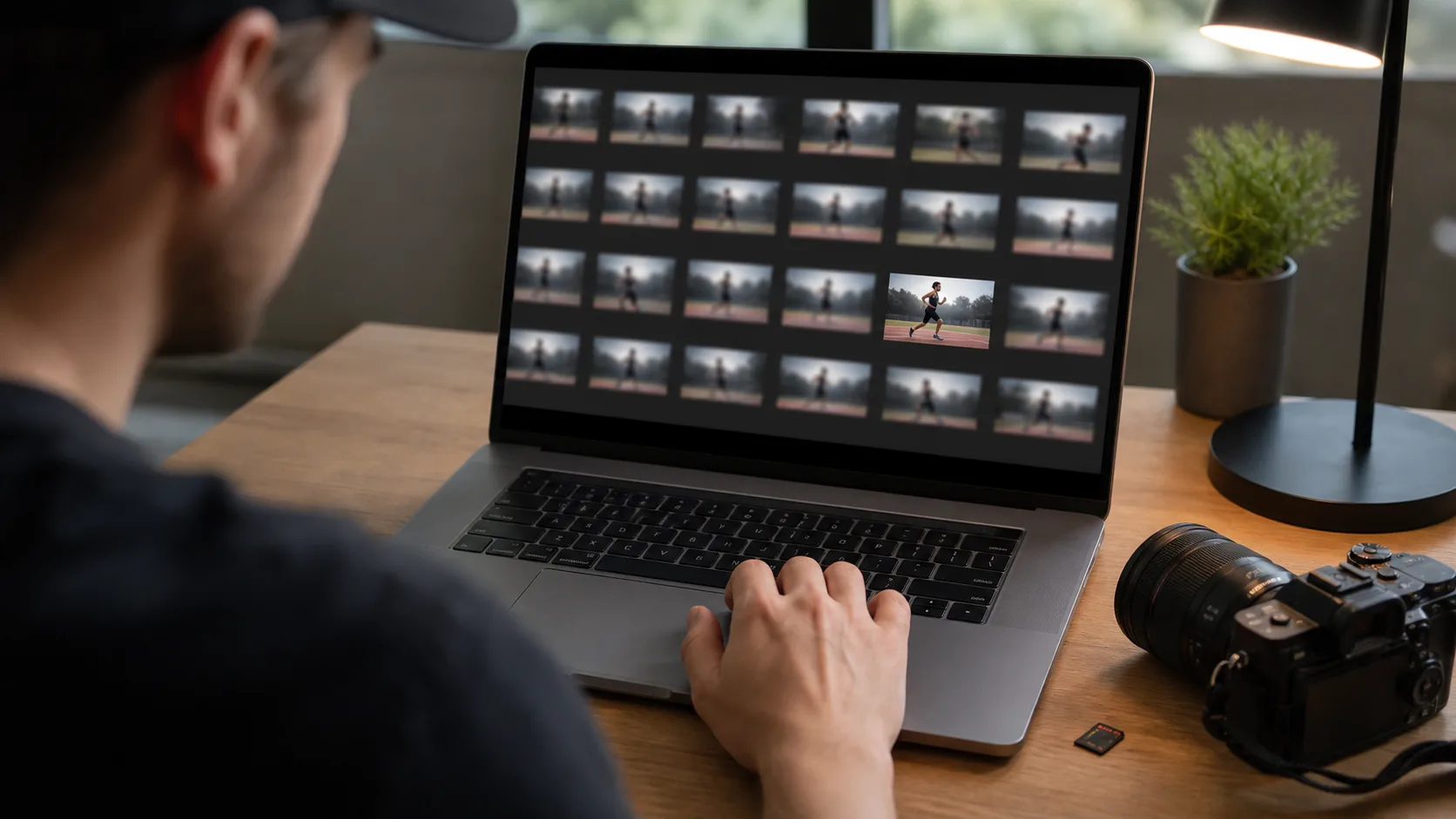 The best action frame is usually the one where sharpness, timing, expression, and story line up.
After editing, use Gampi to keep final action photos tidy, easy to review, and ready to share with clients.
Use a shutter speed fast enough for the subject, track focus before the peak moment, hold the camera steadily, and raise ISO or add light when faster shutter speeds make the frame too dark.
It depends on the subject. Walking people may start around 1/250s to 1/500s, running children often need 1/500s to 1/1000s, and faster sports may need 1/1000s or faster. Treat these as starting points.
The usual causes are subject motion blur, camera shake, missed focus, or depth of field that is too thin. Look at what part of the frame is sharp before changing settings.
No. Stabilization can help reduce camera shake, especially with still subjects, but it does not freeze a moving person, athlete, dancer, or pet. Use shutter speed for subject movement.
Yes, short bursts can help with unpredictable movement, but they work best with continuous autofocus, good timing, and careful review afterward.
Learn practical timing tips for photographers: anticipation, observation, gesture, expression, motion, light, short bursts, patience, and choosing the strongest moment after the shoot.
A practical beginner guide to sharper low-light photos: understand blur versus noise, choose settings, stabilize the camera, use available light, and edit dark files carefully.
A practical guide to indoor photography settings for portraits, events, products, home sessions, low-light rooms, and mixed indoor light.