
Low Light Photography Tips for Beginners
A practical beginner guide to sharper low-light photos: understand blur versus noise, choose settings, stabilize the camera, use available light, and edit dark files carefully.
Photography Tips
6 min read

Published June 18, 2026 | 4 min read
The most common photography mistakes beginners make are fixable habits, not talent problems. Check shutter speed, focus, exposure, white balance, subject clarity, background distractions, light direction, posing comfort, and edit consistency. Improve one category at a time and the whole set gets better.
 Diagnosis works better than blame. Treat each mistake as a small decision you can practice.
Mistake type | What it looks like | Simple fix |
|---|---|---|
Technical | Blur, missed focus, dark files, strange color | Use safer settings and review a test frame |
Visual | Clutter, weak subject, hard light | Move, simplify, and choose better light |
People | Stiff posing, rushed direction, missed expression | Give small prompts and shoot real reactions |
Editing | Heavy color, plastic skin, inconsistent exports | Cull first, edit lightly, and check exports |
Technical issues often come from too little light, a shutter speed that is too slow, missed focus, or mixed color. Start with the cause before changing every setting at once.
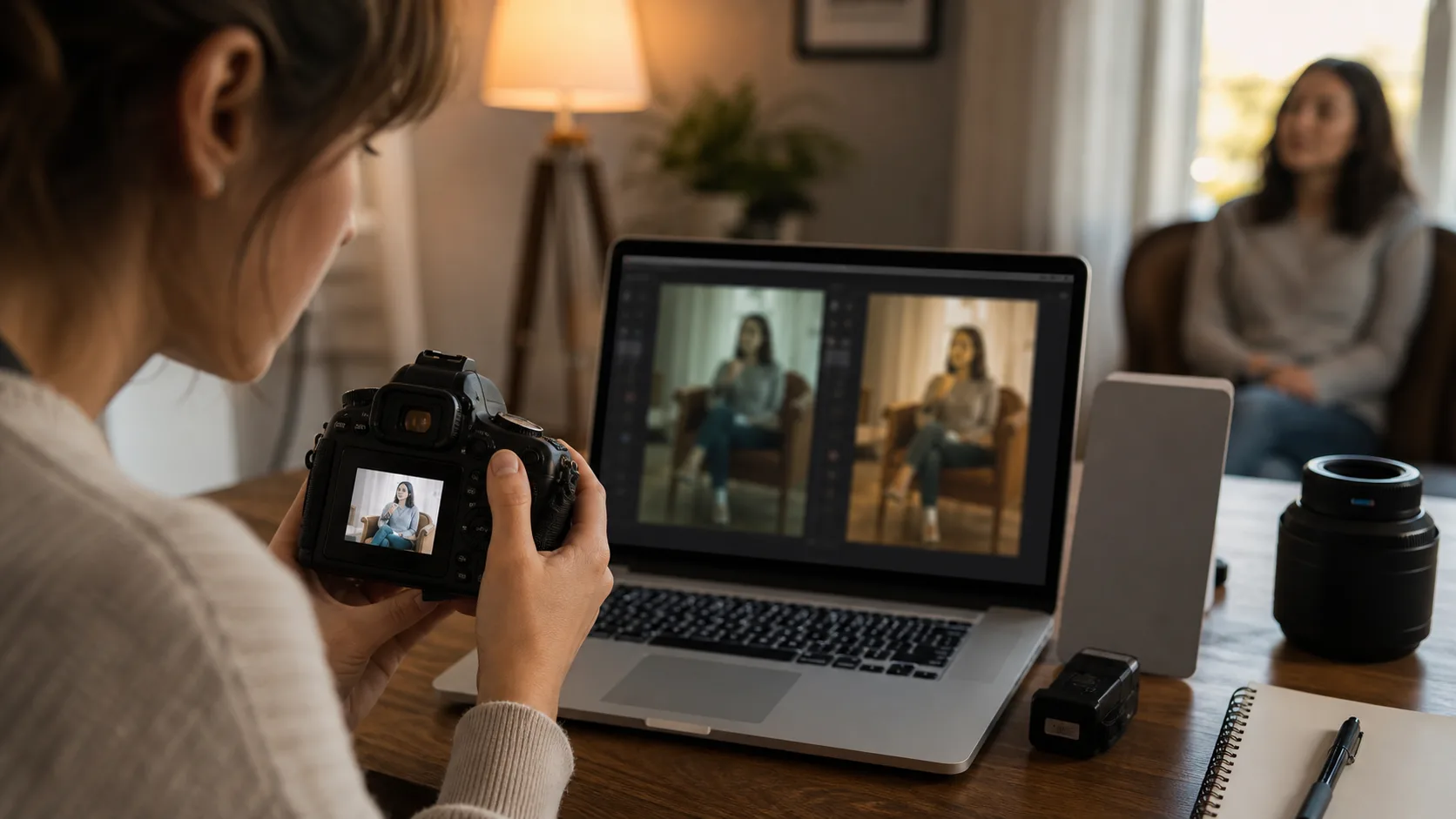 Blur becomes easier to fix once you separate motion, camera shake, and focus placement.
 Color improves when you notice the light source before shooting the whole set.
Photograph one subject at three shutter speeds: too slow, safe, and faster than needed. Compare blur, noise, and focus at full size.
A sharp photo can still feel weak when the subject is not clear. Busy backgrounds, random crops, harsh light, and bright edge distractions pull attention away.
 A few steps often fix light and background faster than new gear.
Photograph the same subject with a cluttered, clean, and contextual background. Choose which frame makes the subject easiest to read.
People photos suffer when the photographer thinks only about settings. Clear communication, small prompts, and a calm rhythm improve portraits, events, and client work.
 People usually need clearer and kinder prompts, not harsher direction.
Spend ten minutes using prompts such as walk, sit, adjust a sleeve, look away and back, or shift weight. Review which prompts look natural.
Editing should make the photo clearer, not louder. Heavy contrast, saturation, smoothing, sharpening, and unchecked exports can weaken otherwise good images.
Edit one image twice, once with basic corrections and once with a stronger style. Compare after a break and reduce anything that distracts from the subject.
When mistakes are easier to spot, selection becomes calmer. Remove technical misses, compare similar frames, and keep images where subject, light, composition, expression, and edit support one goal. Read best composition tips for beginner photographers, best camera settings for indoor photography, and photo editing workflow for beginner photographers.
Use Gampi after editing to keep stronger final photo sets tidy, easy to browse, and ready to share.
Slow shutter speed, missed focus, underexposure, poor white balance, clutter, weak composition, stiff direction, heavy editing, and unchecked exports are common.
Usually the shutter speed is too slow, the camera moved, the subject moved, focus landed in the wrong place, or depth of field was too shallow.
Use clear subject focus, cleaner light, simpler backgrounds, stronger composition, natural color, consistent editing, and careful selection.
Uncontrolled light can look harsh, flat, noisy, or strangely colored. Look for softer direction, open shade, window light, or a cleaner angle.
Review by category, practice one problem at a time, repeat small exercises, study what worked, and use a final checklist.
A practical beginner guide to sharper low-light photos: understand blur versus noise, choose settings, stabilize the camera, use available light, and edit dark files carefully.
A practical beginner guide to stronger photo composition with subject placement, rule of thirds, lines, frames, negative space, balance, backgrounds, and genre examples.
A practical at-home product photography guide for creators, freelancers, small shops, and beginners using window light, simple surfaces, steady framing, and consistent editing.