
Best Golden Hour Photography Tips
Learn practical golden hour photography tips for planning, exposure, portraits, backlight, side light, silhouettes, lens flare, composition, and final image selection.
Photography Tips
8 min read

Published July 1, 2026 | 7 min read
To capture motion blur creatively, choose what should move, what should stay readable, and how much time the shutter should collect. Use slow shutter speeds for streaks, panning for a sharper subject against a smeared background, tripod-supported long exposures for water and light trails, and intentional camera movement when you want the whole frame to feel kinetic. The difference between accidental blur and intentional blur is not mystique; it is a visible anchor, a clean composition, and a reason for the smear to exist.
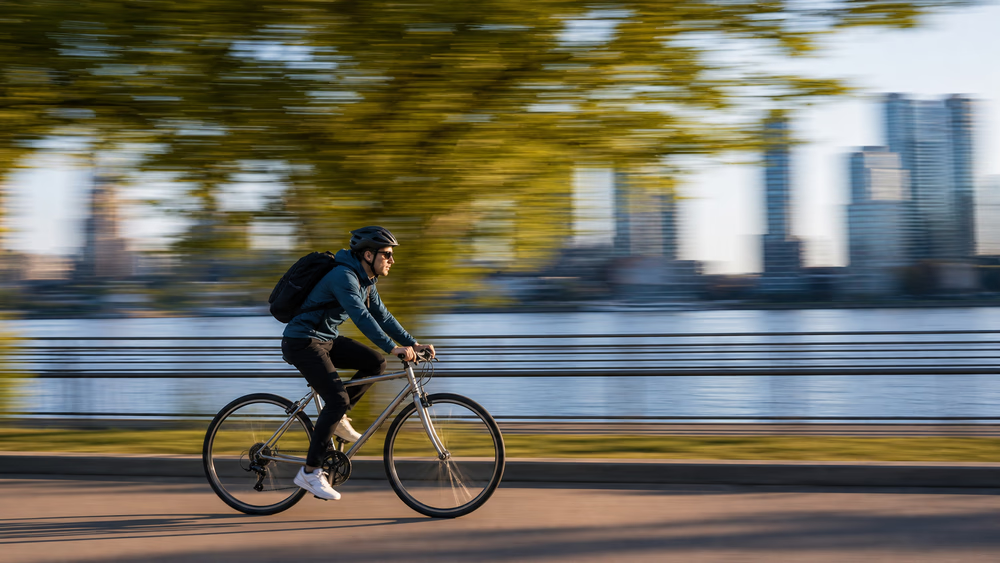 Panning works when the subject remains legible and the background carries the speed.
Motion blur describes movement recorded during the exposure. Camera shake is the whole frame wobbling because the camera moved without intention. Missed focus is the sharp plane landing in the wrong place. A strong blur photograph can contain soft edges, but it still needs discipline: one face, wheel, torso, building edge, rock, lamp, or silhouette should tell the viewer where to look. Without that lucid anchor, blur becomes a fog of excuses.
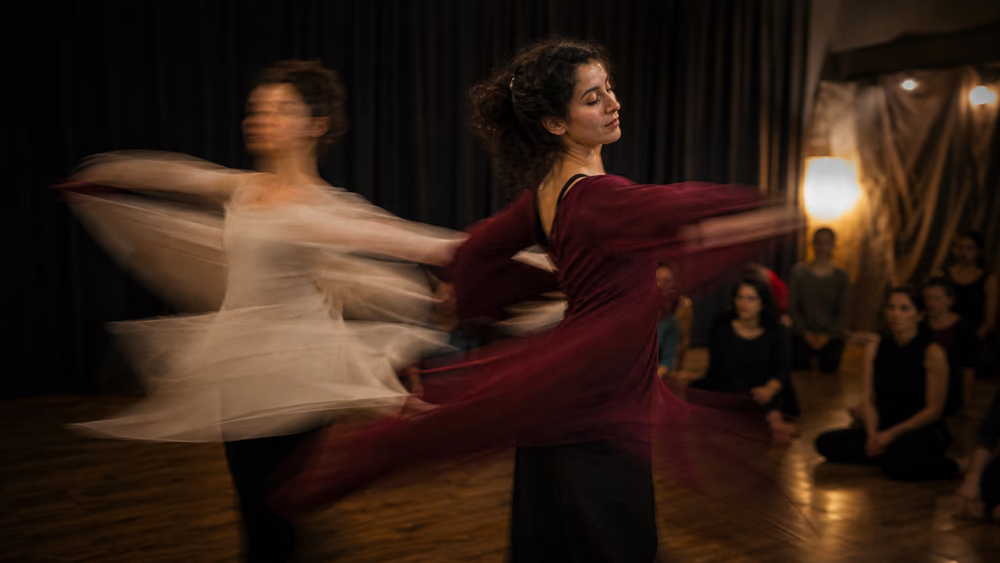 In dance and events, a slightly sharp face or torso can hold the picture while fabric and arms become atmosphere.
The numbers below are starting points, not commandments. Subject speed, focal length, stabilization, distance, light, and hand steadiness all change the result. Make three or four frames at each speed before judging; one frame may look chaotic while the next has exactly the right cadence.
Technique | Starting shutter range | Support | What should stay readable |
|---|---|---|---|
Panning cyclist, runner, or street subject | 1/15 to 1/60 sec | Handheld, rotate from the waist, follow through after pressing | Head, torso, bicycle frame, or the main shape of the subject |
Dance, crowds, or event atmosphere | 1/4 to 1/30 sec | Steady stance, wall, monopod, or image stabilization as a starting aid | One face, gesture, architectural edge, or still person |
Water blur | 1/2 to 4 sec | Tripod or solid support on safe ground | Rocks, banks, trees, and the water path |
Traffic light trails | 2 to 15 sec | Tripod from a protected sidewalk, balcony, or pedestrian bridge | Road shape, skyline, railing, or fixed buildings |
Intentional camera movement | 1/4 to 2 sec | Handheld or tripod head, moved deliberately | Rhythm, color blocks, or a small subject silhouette |
 Light trails should be photographed from protected places. A safe viewpoint is part of the technique, not a footnote.
Slow shutter photography lets time accumulate. A dancer turns into a ribbon, a crowd becomes a current, water turns velvety around hard stones, and car lights draw luminous threads. Panning is different: you move the camera with the subject so the subject stays comparatively sharp while the background stretches. Intentional camera movement is different again; the camera itself becomes the brush, and the frame must be judged more like rhythm than documentation.
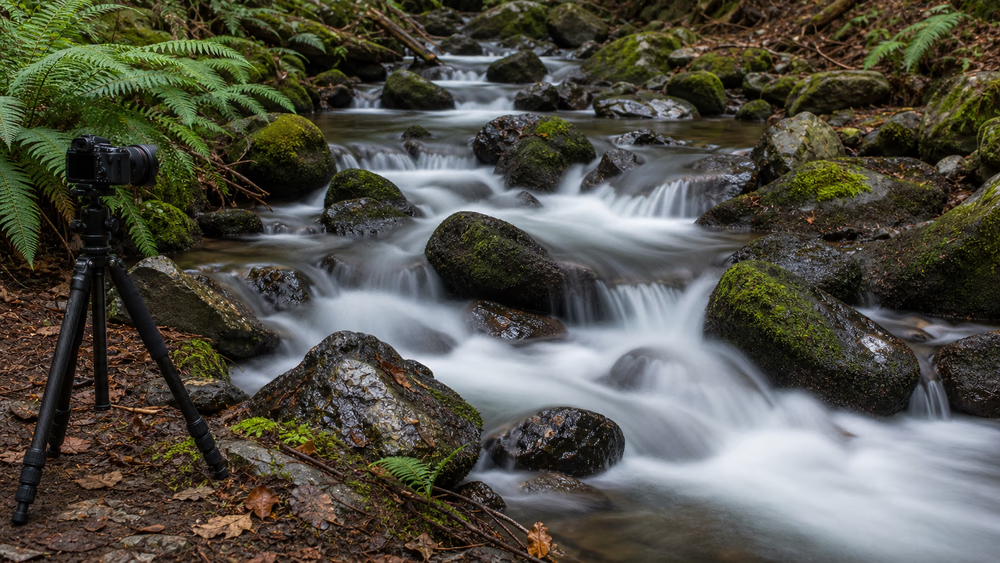 For water, the moving part can blur beautifully only if the fixed parts stay convincing.
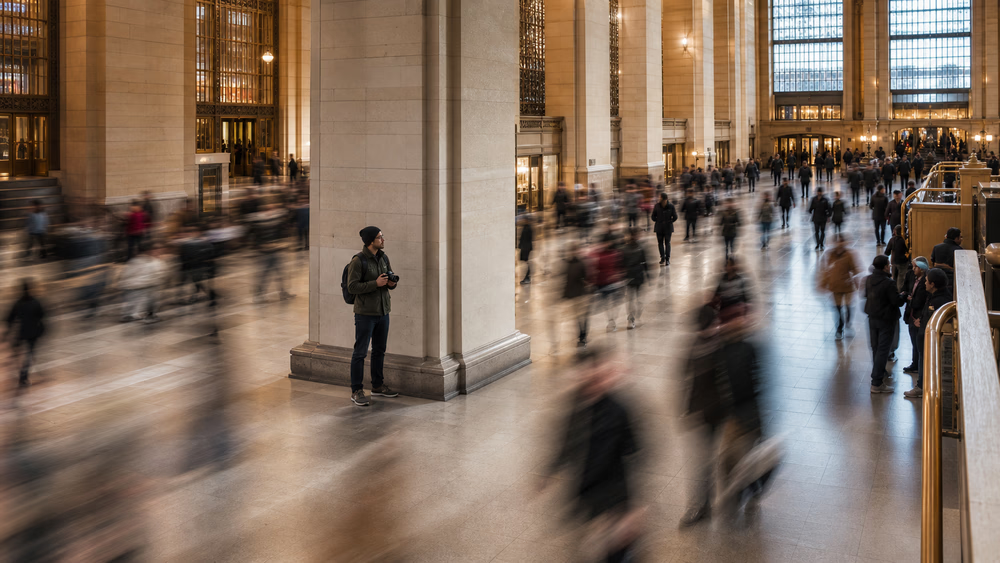 A still person or fixed architectural edge keeps a crowd blur from dissolving into visual mush.
Genre | Blur idea | Keep intentional by |
|---|---|---|
Street | Pedestrians sliding past a still subject, panned cyclists, umbrellas in rain, escalator flow | Keeping faces private when needed, using safe positions, and letting architecture hold the frame |
Travel | Train windows, ferry wakes, market crowds, hand-held evening streets | Keeping one landmark, horizon, sign-free wall, or human silhouette readable |
Dance and events | Arm trails, spinning fabric, guests moving across a reception floor | Anchoring the blur with one expression, body line, or pool of light |
Sports | Panning runners, cyclists, skaters, or horses from a safe sideline | Matching the subject speed and leaving room for the motion to travel |
Portraits | Hands, scarf, coat, hair, or turn of the shoulders moving around a calm face | Keeping the eyes or profile readable enough to feel deliberate |
Nature | Water, reeds, grasses, leaves, rain, and wind-blown branches | Letting fixed rocks, trunks, or a clean horizon provide structure |
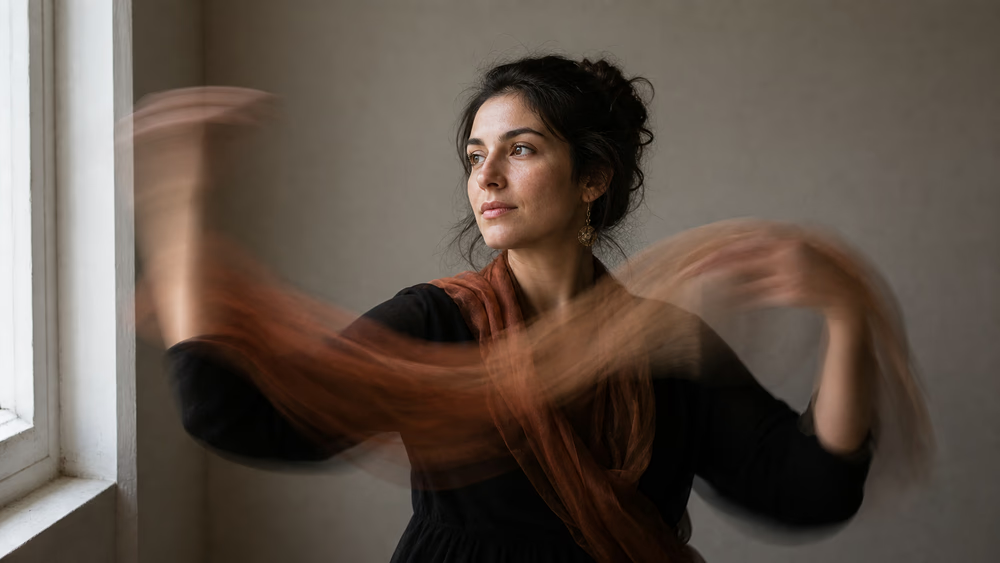 Portrait blur feels intentional when the motion serves expression instead of swallowing the whole face.
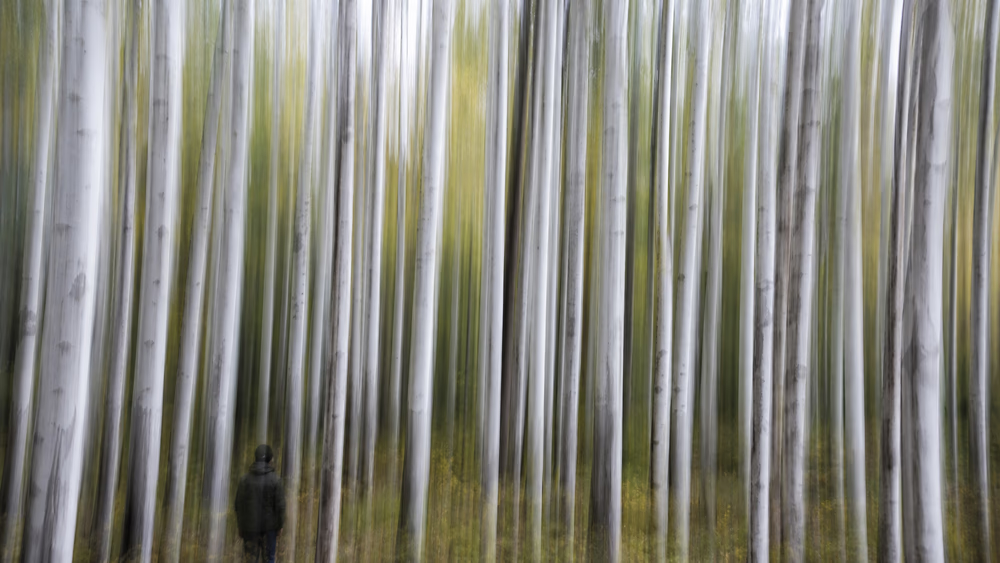 Intentional camera movement works best when rhythm, color, and one small anchor survive the smear.
Mistake | Why it weakens the photo | Fix |
|---|---|---|
Everything is equally blurry | The viewer has no foothold and reads the image as a miss. | Add a still anchor, sharper subject, fixed edge, or more decisive composition. |
The shutter is too slow for the idea | Gesture turns into paste, especially with faces and hands. | Speed up one stop, repeat the movement, or choose a simpler subject shape. |
The shutter is too fast | The image looks like a slightly soft accident instead of motion. | Slow down gradually and compare adjacent frames. |
Stabilization is misunderstood | Stabilization can reduce camera wobble, but it does not freeze a moving subject. | Use it to steady the background, then choose shutter speed for the subject motion. |
The setup is unsafe | No photograph needs a risky road, slippery rock, or obstructed crowd path. | Use protected viewpoints, dry ground, sidelines, railings, and patient timing. |
When reviewing, compare neighboring frames ruthlessly. Keep the ones where blur clarifies speed, mood, or atmosphere, and discard the ones where blur merely hides weak composition. For related technique, read how to photograph movement without blur, timing tips for photographers, and how to take better candid photos. Once the final sequence is chosen, Gampi can help present a tight motion-blur set in a clean gallery without burying the best frames inside a swollen folder.
Use Gampi after editing to organize final motion-blur images, share a focused gallery, and keep client or portfolio review uncluttered.
Use a slower shutter speed while either the subject moves, the camera moves, or both move deliberately. Keep one visual anchor readable so the blur feels designed rather than accidental.
It depends on subject speed and distance, but useful starting points include 1/15 to 1/60 sec for panning, 1/4 to 1/30 sec for people moving through a scene, and multiple seconds for light trails or water.
Panning photography means moving the camera with a moving subject during the exposure. When it works, the subject stays comparatively sharp while the background becomes streaked.
Choose a clear subject, keep one anchor sharp or readable, compose cleanly, repeat the movement, and select only frames where the blur supports speed, mood, or story.
Not always. Panning and intentional camera movement are often handheld, but tripod or solid support helps for water, light trails, crowds with fixed architecture, and any frame where the background should stay sharp.
Learn practical golden hour photography tips for planning, exposure, portraits, backlight, side light, silhouettes, lens flare, composition, and final image selection.
A practical beginner guide to sharper low-light photos: understand blur versus noise, choose settings, stabilize the camera, use available light, and edit dark files carefully.
A practical guide to indoor photography settings for portraits, events, products, home sessions, low-light rooms, and mixed indoor light.